
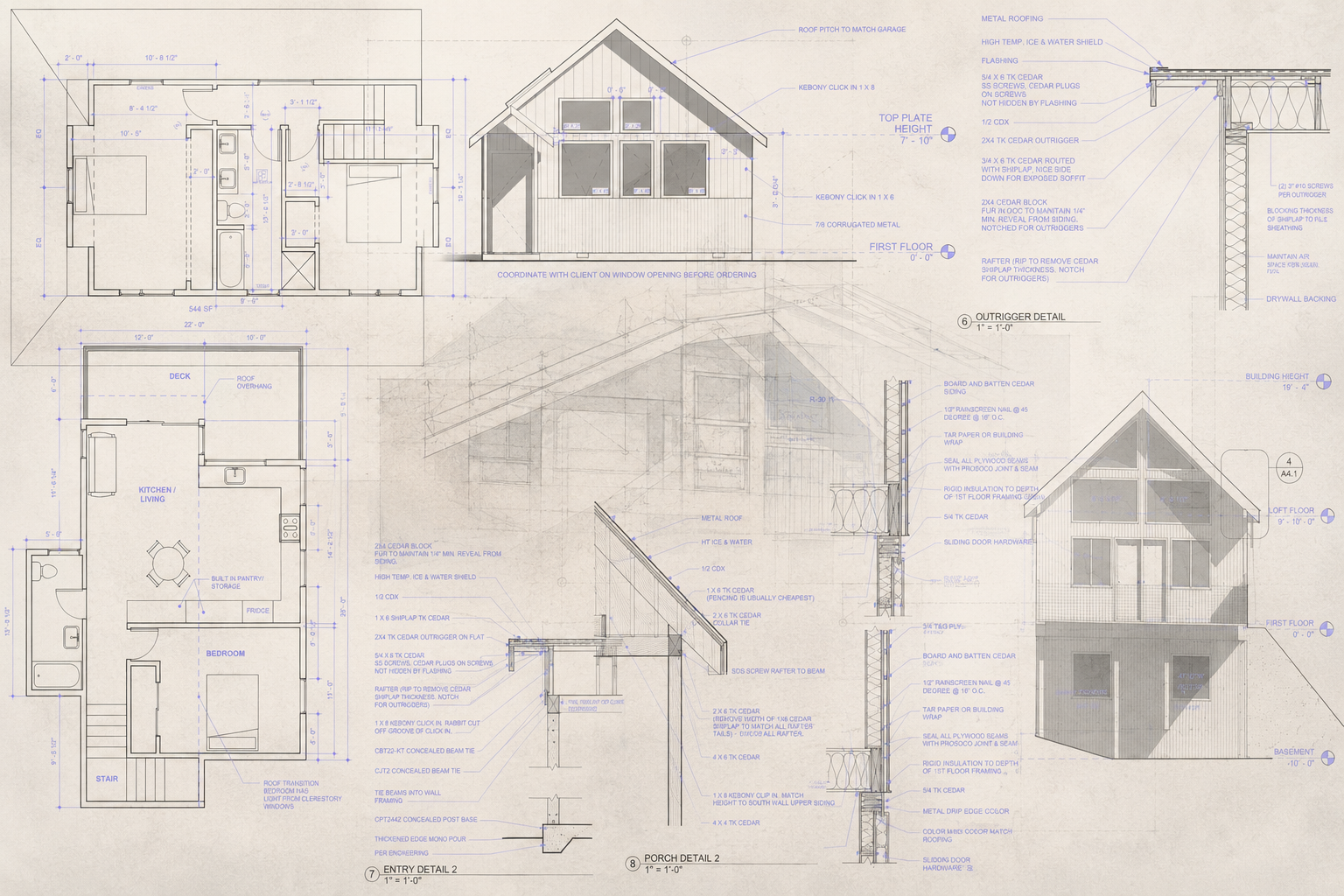
Designing a home is a guided, collaborative process—from initial concept through construction—grounded in thoughtful planning, clear communication, and attention to detail.
-
Every project begins with an on-site consultation, where we meet in person to explore the property, discuss your vision, and establish project goals, scope, and budget. Following this initial visit, a tailored proposal is developed outlining the design process, services, and next steps to bring your project to life.
-
Once engaged as a client, the project enters the feasibility phase. During this stage, we conduct a thorough evaluation of the site's opportunities and constraints, considering factors such as land use regulations, utility availability, views, solar orientation, privacy, openness, and environmental conditions. We also assess regulatory requirements, including stormwater management, critical areas, and permitting processes. Any specialized consultants or professionals needed to support the project are identified early to ensure a coordinated approach. This comprehensive due diligence establishes a clear foundation for design, reduces potential risks, and provides greater certainty in project planning, scheduling, and budgeting.
-
The schematic design phase is an iterative and collaborative process that transforms project goals into a clear architectural vision. Building on the information gathered during feasibility, multiple design concepts are explored that respond to the site's unique characteristics, your lifestyle, budget, and project objectives.
Through sketches, diagrams, floor plans, and three-dimensional studies, ideas are tested for spatial organization, circulation, natural light, views, privacy, and the relationship between indoor and outdoor living. Each design iteration is reviewed together, allowing feedback and new insights to inform the next round of refinement.
As the design evolves, key decisions regarding building form, scale, orientation, and overall character begin to take shape, providing a strong foundation for subsequent design phases.
-
During the design development phase, the approved schematic design is refined into a more detailed and coordinated architectural solution. Building layout, room dimensions, exterior appearance, and key architectural elements are further developed to ensure the design aligns with the project's goals, budget, and functional requirements.
Materials, finishes, structural & mechanical systems, and major building components are evaluated and integrated into the design. Coordination with consultants and engineers begins in greater detail, helping to resolve technical requirements and identify potential challenges before construction documents are prepared.
By the end of this phase, the design has been substantially defined, providing a clear understanding of the project's scope, appearance, and performance.
-
The construction document phase translates the design into a detailed and coordinated set of drawings and specifications that guide permitting and construction. Building on the approved design development phase, we refine and finalize all architectural elements, ensuring clarity, accuracy, and consistency across the entire project.
This includes detailed floor plans, elevations, sections, and construction details, along with specifications for materials, assemblies, and key building systems. Coordination with engineer and other consultants is integrated to ensure all components work together seamlessly.
The result is a comprehensive construction document package that communicates the design intent clearly, supports accurate pricing and permitting, and provides the contractor with the information needed to build the project with confidence
-
Permitting is included in all services provided. Required documentation, including permit applications, fixture counts, energy compliance forms, engineering drawings, and supporting materials, is coordinated and assembled into a complete permit package for submission. Prior experience within a permitting department offers a thorough understanding of review requirements and approval processes, helping projects advance through permitting efficiently and with fewer delays.
-
Construction administration helps ensure that the vision established during design is successfully realized in the field. Remaining actively involved throughout construction, serving as a trusted advocate and resource for both the homeowner and contractor.
Site visits are conducted to observe progress, review construction for general conformance with the design intent, respond to contractor questions, review shop drawings and material submittals, and help resolve unforeseen conditions that may arise during construction. Our continued involvement helps maintain design quality, facilitate communication, and support informed decision-making throughout the building process.
Construction is where countless decisions are made, and continuing to be engaged during this phase can help protect your investment, reduce costly misunderstandings, and ensure that the completed home reflects the goals and vision established from the very beginning.